Hotel or private villa? An honest guide for Muslim families visiting Tokyo
We run a Muslim-friendly villa in Tokyo, so you might expect us to say "always rent a villa." We won't. For some trips a hotel really is the better choice. But for Muslim families and groups of five to ten people, the math — and the daily rhythm of prayer and halal meals — usually points the other way. Here is the honest comparison we wish someone had written for our own guests.
01The three problems hotels can't easily solve
1. Praying five times a day in one hotel room
A standard Tokyo hotel room is 18–25 ㎡, most of it bed. With a family of five, someone is always praying between the bed and the luggage while someone else needs to pass. Few Tokyo hotels have a dedicated prayer room, and when they do it is a single shared musalla several floors away. It works — but it never feels settled, and over a week the friction adds up.
2. The halal breakfast question, every single morning
Most Tokyo hotel breakfasts are buffets where pork and non-halal items share the same tongs and the same kitchen. Some hotels can prepare a Muslim-friendly plate on request; many cannot say what is in the miso soup. So families end up skipping the breakfast they paid for and hunting for konbini options — every morning, with hungry children.
3. The arithmetic of six to ten people
Tokyo hotel rooms sleep two, sometimes three. A family or group of eight needs three to four rooms — often on different floors, since connecting rooms are rare in Japan. At a mid-range ¥25,000–40,000 per room per night, that is ¥75,000–160,000 a night, before breakfast, for a family that mostly wants to be in one place together. A whole house that sleeps eight to ten typically costs less than two of those rooms — and everyone is under one roof.
02What a whole house changes
- Prayer becomes normal again. A real prayer space — ideally with the qibla marked — means fajr together as a family, not in shifts around a bed. This is the single thing our guests mention most.
- The kitchen solves halal, quietly. With a kitchen you control, breakfast is rice, eggs and halal groceries you bought yourself. No interrogating buffet staff, no daily restaurant hunt with tired children. (Where to buy halal ingredients in Tokyo: see our halal food & groceries guide.)
- Children can be children. No shared walls with strangers at 9 pm, no elevator etiquette, a living room to spread out in after a long day.
- Wudu and bathing work the way you're used to. Japanese houses have a separate washing area beside the bath — practically made for wudu — instead of a cramped unit bathroom.
- Grandparents come too. Multi-generation trips are where one house beats four rooms by the widest margin: one dinner table, one living room, one set of house keys.
03To be fair: when a hotel is the better choice
Honesty matters more to us than a booking. Choose a hotel if:
- You are one or two people. A whole house rarely beats a good hotel on price for a couple, and hotels win on location density near stations.
- You want daily housekeeping and a concierge. Villas are self-catering by nature; towels do not refresh themselves.
- You will only sleep there. If your itinerary is dawn-to-midnight and food is always eaten out, a hotel's simplicity wins.
- You need on-site staff at 2 am. Most villas (ours included) are self-check-in with remote support, not a staffed front desk.
04How to judge a "Muslim-friendly" villa — a checklist
"Muslim-friendly" is an unregulated word. Before booking any villa (including ours), check:
- KitchenIs it genuinely halal-only — no pork or alcohol ever cooked in it, with dedicated cookware and tableware? Or just "you may cook"? Ask directly.
- PrayerIs there a dedicated prayer space with qibla marked, or "space on the floor"? Two spaces matter for larger families and overlapping prayer times.
- Wudu & bathSeparate washing area? Bidet toilets? Alcohol-free cleaning is a plus few places can honestly claim.
- Whole house?"Villa" sometimes means one floor of a shared building. One group per night, whole building, is the real thing.
- LocationMinutes to a station beats minutes to a landmark. Check the route to a mosque for Jumu'ah and to halal groceries.
- LicenceIn Japan, legal lodgings display a ryokan-gyo licence number. If you cannot find one, walk away.
05How we answer our own checklist
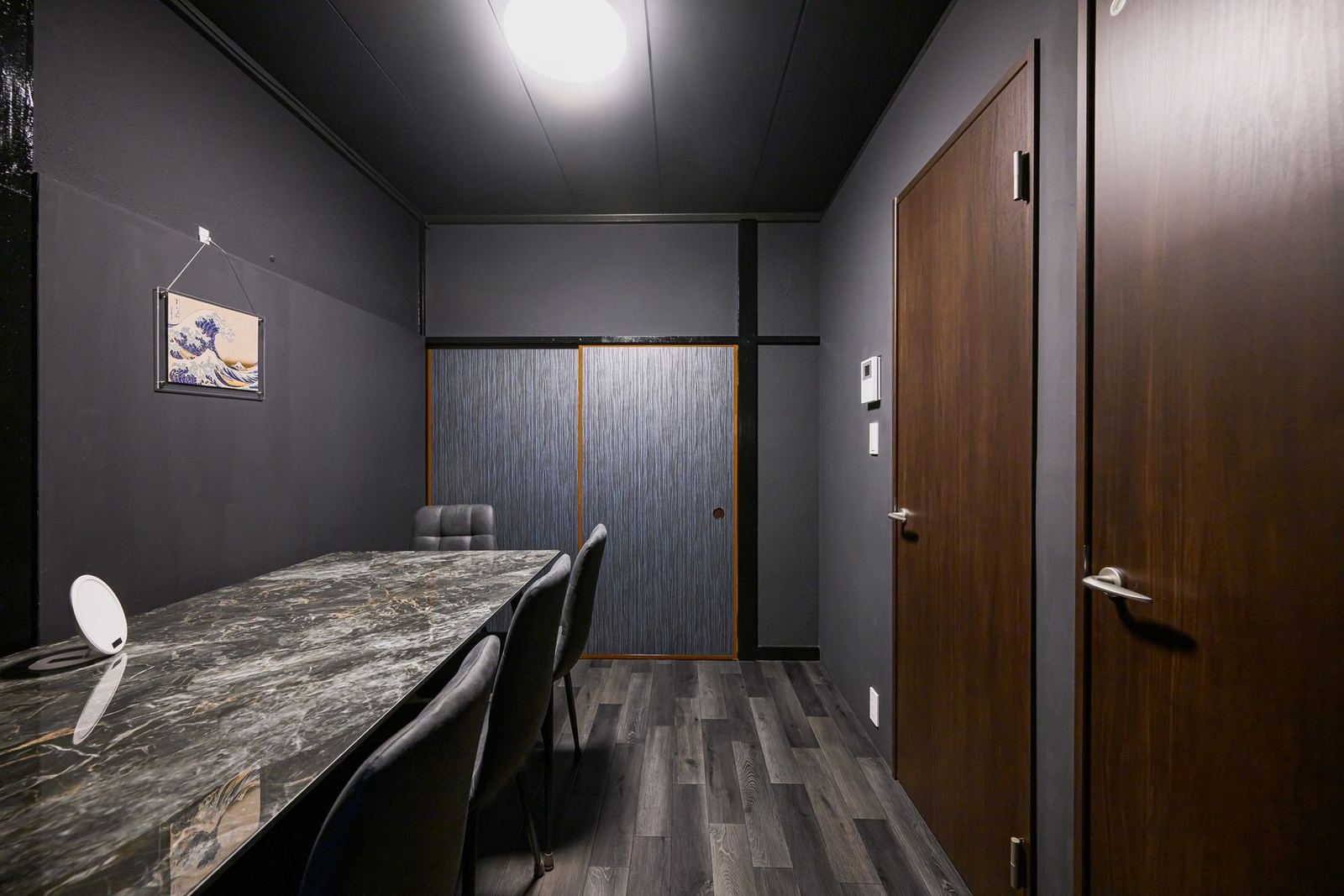
For transparency — THE HOSPITEL by Dr., our villa in Higashi-Mukojima, Sumida: a whole renovated Japanese house for one group per night, up to 10 guests, 3 bedrooms. Two dedicated prayer rooms with qibla markings. A halal-only kitchen (pork and alcohol have never entered it) with dedicated cookware. Wudu-ready bath, bidets, alcohol-free cleaning. Licensed under ryokan-gyo permit 7墨衛生環第977号. Fifteen minutes from Tokyo Skytree, twenty from Asakusa, with the neighborhood mosque a 25-minute walk away. Sleep design — blackout, bedding, quiet — curated by the physician who founded it.
See if our house fits your family
One group per night, up to 10 guests. Best rate on the official site — availability calendar and secure PayPal payment included.
Check availability